Source No Residue Carburetor Cleaner for Engines, Injectors, Chokes
Compare 30 verified listings for no residue carburetor cleaner suitable for engines, fuel injectors, and carburetor chokes. Buyers can review specifications, pricing, and customization options from manufacturers in China; compare the available evidence and request quotations based on your requirements.
Key considerations
Products List


Comprehensive Sourcing Guide
No Residue Carburetor Cleaner Sourcing Guide
Procuring no residue carburetor cleaner requires a disciplined approach to verifying chemical composition and physical properties, as these factors directly impact engine performance and safety. Buyers must prioritize products that explicitly state their ability to dissolve carbon and oil pollution without leaving behind sticky deposits or corrosive residues. The supplied data indicates that many listings describe the product as a liquid aerosol with a density of 0.78 g/cm3 at 20c, which suggests a formulation designed for rapid evaporation and clean removal of mechanical dirt. Understanding these baseline physical attributes is essential for ensuring that the cleaner effectively targets the specific types of engine grime without damaging sensitive components like oxygen sensors or catalytic converters.
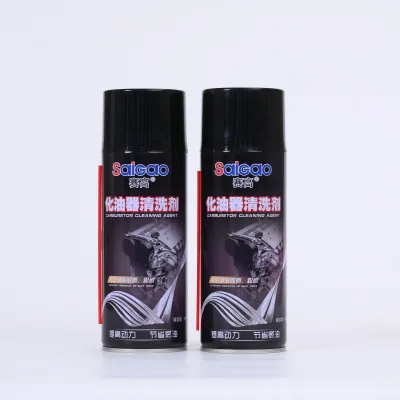
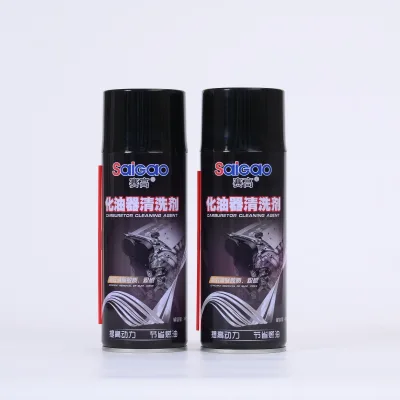
Beyond the chemical formulation, the packaging and delivery method play a critical role in maintaining product integrity and ease of use. The observed market signals show a prevalence of 450ml tin-plate cans packed in carton boxes, often with quantities of 12 or 24 units per master carton. This standardized packaging format facilitates efficient logistics and storage for both distributors and end-users. However, buyers should verify that the "no residue" claim is supported by the product's solubility characteristics, which are listed as negligible in some contexts, implying that the solvent components evaporate completely rather than leaving a soluble film. This distinction is vital for applications where any remaining chemical trace could interfere with subsequent mechanical operations or cause long-term degradation of engine parts.
Product Scope and Observed Listing Signals
The current market landscape for carburetor and injector cleaners reveals a diverse range of product specifications that buyers must carefully navigate to find the right fit for their needs. Listings frequently highlight models such as G1003 and C1, with volumes consistently centered around 450ml, indicating a standard industry size for automotive aerosol sprays. The observed price range of 0.3 to 1.08 USD suggests a competitive market with varying quality tiers, while minimum order quantities (MOQs) fluctuate significantly from 300 to 12,000 pieces. This wide variance in MOQs allows buyers to scale their orders based on immediate demand, but it also necessitates a clear understanding of the supplier's production capacity and flexibility. Buyers should assess whether the supplier can accommodate smaller trial orders before committing to larger volumes, especially when testing new formulations for no-residue performance.
In addition to volume and pricing, the physical state and application method are key indicators of product suitability. Most observed products are described as aerosol liquids with a flash point of 40c and a boiling point between 50 to 120c, which are critical safety parameters for storage and transportation. The presence of LPG as a propellant is common, ensuring consistent spray performance across various temperatures. Buyers should also note the pH levels, which vary from neutral to base, as this affects the cleaner's aggressiveness against different types of deposits. A base pH may be more effective for heavy carbon buildup, while a neutral pH might be safer for frequent maintenance. Understanding these nuances helps buyers align their procurement with specific cleaning requirements, ensuring that the selected product delivers the promised no-residue results without compromising engine health.
Technical Specifications to Verify
When evaluating technical specifications, buyers must focus on the chemical properties that ensure a clean burn and leave no harmful residues. The density of 0.78 g/cm3 is a key metric that influences how the cleaner interacts with engine components, suggesting a lightweight formulation that evaporates quickly. Buyers should verify the % volatile content, which is listed as 100 in some contexts, indicating that the product is designed to dissipate entirely after use. This characteristic is crucial for preventing the accumulation of solvent residues that could attract dust or cause corrosion over time. Additionally, the expiration date of three years provides a window for inventory management, but buyers should ensure that the product is stored correctly to maintain its efficacy and safety profile throughout its shelf life.
The physical state and packing type are also critical technical considerations that impact both performance and logistics. The product is consistently described as an aerosol liquid in tin-plate cans, which offer robust protection against leakage and pressure changes. Buyers should confirm the weight of the individual cans, which is observed at 322g, to ensure accurate shipping calculations and cost projections. Furthermore, the use of carton boxes for bulk packing, with configurations like 24PCS/CTN, facilitates efficient handling and storage. It is essential to verify that the packaging materials are compatible with the chemical contents to prevent any adverse reactions or degradation of the container. By meticulously checking these technical details, buyers can ensure that the product meets their operational requirements and maintains its quality from production to final application.
Compliance and Safety Documentation
Safety and compliance are paramount when sourcing carburetor cleaners, given the hazardous nature of the chemicals involved. The listed hazard class of 2.1 indicates that the product is a flammable gas, which necessitates strict adherence to transportation and storage regulations. Buyers must ensure that suppliers provide comprehensive safety data sheets (SDS) that detail the handling, storage, and emergency response procedures. The flash point of 40c and boiling point range of 50 to 120c are critical parameters that influence the product's classification and handling requirements. Understanding these properties helps buyers implement appropriate safety measures in their facilities, reducing the risk of fire or explosion during storage and use.
In addition to safety data, buyers should verify the certifications and standards that the supplier adheres to. The presence of ISO9001 certification suggests that the manufacturer follows established quality management practices, which is a positive indicator of product consistency and reliability. However, buyers should also check for any region-specific certifications or standards that may apply to their market, such as REACH in Europe or EPA regulations in the United States. The HS code of 3402209000 provides a standardized classification for customs purposes, but buyers should confirm that this aligns with their local import requirements. By thoroughly reviewing compliance documentation, buyers can mitigate legal and operational risks associated with importing and distributing hazardous chemical products.
Cost Drivers and Commercial Terms
Understanding the cost drivers and commercial terms is essential for effective procurement planning and budget management. The observed price range of 0.3 to 1.08 USD per unit reflects variations in product quality, packaging, and supplier location. Buyers should consider the impact of raw material costs, such as the price of propellants and solvents, on the final product price. Additionally, the MOQs ranging from 300 to 12,000 pieces influence the unit cost, with larger orders typically benefiting from economies of scale. Buyers should negotiate terms that align with their inventory turnover rates, avoiding excessive stockpiling that could lead to expiration issues or increased storage costs.
Delivery time and sample availability are also significant commercial factors that affect the procurement process. The listed delivery time of 20-25 days provides a baseline for planning, but buyers should confirm if this timeline is consistent across different order sizes and seasons. The offer of free samples allows buyers to test the product's performance and quality before committing to a large order, which is a valuable risk mitigation strategy. Buyers should also inquire about the supplier's flexibility in accommodating custom packaging or branding requirements, as this can add value to the final product. By carefully evaluating these commercial terms, buyers can optimize their procurement strategy to achieve the best balance between cost, quality, and supply chain efficiency.
Supplier Qualification and Quality Control
Supplier qualification is a critical step in ensuring the reliability and consistency of the no residue carburetor cleaner supply chain. Buyers should prioritize manufacturers with a proven track record in producing automotive cleaning chemicals, as indicated by the business type listed as "Manufacturer" in many profiles. The origin of the products, primarily from Guangdong, Guangzhou, and Shandong in China, suggests a concentration of manufacturing expertise in these regions. Buyers should verify the supplier's production capacity and quality control processes to ensure that they can meet the required specifications and volume demands. Additionally, the acceptance of OEM services indicates that suppliers are willing to customize products to meet specific buyer requirements, which can be a valuable advantage for brand differentiation.
Quality control measures should be rigorously assessed to ensure that the product consistently delivers the promised no-residue performance. Buyers should request detailed quality assurance protocols, including testing for density, volatility, and residue levels. The observed specifications, such as a density of 0.78 g/cm3 and a 100% volatile content, should be verified through independent testing or third-party certifications. Buyers should also inquire about the supplier's process for handling deviations from these specifications, ensuring that any non-conforming products are identified and addressed promptly. By establishing a robust supplier qualification and quality control framework, buyers can minimize the risk of receiving substandard products and maintain the integrity of their supply chain.
Long-Term Procurement Checks
Long-term procurement success depends on establishing ongoing checks and balances to monitor supplier performance and product quality. Buyers should implement regular audits and performance reviews to assess the supplier's adherence to agreed-upon specifications and delivery timelines. The three-year expiration date of the product provides a clear window for inventory management, but buyers should monitor stock rotation to prevent any degradation in product quality over time. Additionally, buyers should stay informed about changes in regulatory requirements and industry standards that may impact the product's classification or handling procedures. By maintaining a proactive approach to supplier management, buyers can ensure a stable and reliable supply of no residue carburetor cleaner.
Furthermore, buyers should foster a collaborative relationship with their suppliers to drive continuous improvement and innovation. Regular communication regarding market trends, customer feedback, and technical advancements can help identify opportunities for product enhancement and cost optimization. Buyers should also consider diversifying their supplier base to mitigate risks associated with single-source dependencies, especially given the varying MOQs and lead times observed in the market. By building a resilient and adaptable procurement strategy, buyers can navigate market fluctuations and maintain a competitive edge in the automotive cleaning chemical sector. This long-term perspective ensures that the procurement process remains aligned with the evolving needs of the business and its customers.
FAQs
How does no residue carburetor cleaner remove deposits without leaving film behind?
It uses a volatile solvent blend, typically with 100% volatile content, that dissolves carbon, gum, and oil deposits and then evaporates completely. As the carrier flashes off between roughly 50 and 120 degrees Celsius boiling range, no solid film or rosin remains on jets, linkage, or passages. Allow the treated part to dry fully before reassembly for the cleanest result.
What is the typical can size and packing format for this cleaner?
The standard format is a 450ml aerosol can, which falls within the 300 to 500ml capacity range. Cartons commonly hold 24 pieces per carton, though 12-can packing also appears. Boxes, cartons, and tin-plate can formats are used for packing. Confirm the exact configuration per carton and total units per order before confirming the packing specification.
Can I order custom branding or a private label version?
Yes, customization is available and OEM orders are accepted by the manufacturer. You can typically adjust artwork, label design, and packing to your requirements. Provide your label files and quantity needs early, since customized orders may follow a 20 to 25 day delivery window. A free sample is offered so you can verify cleaning performance before committing to production quantities.
What minimum order quantity should I expect when sourcing?
Observed minimum order quantities range widely, from as low as 600 pieces up to 7,500 or even 12,000 pieces depending on the listing and customization level. Private label runs generally sit at the higher end. Discuss MOQ alongside your artwork and packing requirements, since customized aerosol production usually requires larger batches than standard 450ml stock configurations.
Which certifications or quality standards should I verify before ordering?
ISO9001 certification is listed for the product, indicating a documented quality management system. Beyond that, verify that each batch matches the stated specifications, including 450ml fill, flash point around 40 degrees Celsius, and density of 0.78 g/cm3 at 20 degrees Celsius. Because the product is hazard class 2.1 aerosol, confirm compliant shipping documentation and HS code 3402209000 handling.
How should this aerosol cleaner be stored and what is its shelf life?
The stated expiration date is 3 years from production when stored correctly. Keep cans upright in a cool, dry area away from heat sources, since the product has a flash point of 40 degrees Celsius and is 100% volatile with LPG propellant. Avoid puncturing or exposing cans to temperatures above aerosol storage limits, and rotate stock so older cartons are shipped or used first.
What delivery time should I plan for a bulk order?
A delivery window of 20 to 25 days is listed for production orders, counted after order confirmation and artwork approval for customized requests. Stock configurations in standard 450ml by 24-piece cartons may move faster. Factor in additional transit time for hazardous class 2.1 aerosols, as sea freight booking for such goods can require extra lead time beyond production.